Why a Daily Routine Makes Life Easier for Dogs (and People)
A predictable rhythm helps most dogs relax, learn faster, and make better choices because they know what’s coming next. When sleep, meals, potty time, activity, and calm time happen in a steady pattern, the body’s internal clock stays more consistent—often leading to fewer accidents, less pacing, and smoother nights. For general pet-care basics and wellness reminders, the American Veterinary Medical Association (AVMA) is a reliable resource.
Start with the Three Anchors: Sleep, Food, and Potty
Before adding anything fancy, lock in the three anchors that keep the day running: when your dog sleeps, eats, and goes out. Consistency matters more than perfection—aim for reliable windows that fit your household.
- Set wake-up and bedtime windows: Many adult dogs do best with predictable timing, while puppies typically need earlier bedtimes and more overnight support.
- Pair potty trips with transitions: Go out after waking, after meals, after play, and before bed. These “automatic” outings reduce accidents and build house-training clarity.
- Choose meal times you can keep: Stable meal timing supports digestion and appetite. Keep portions consistent and avoid frequent “bonus” calories that can nudge weight upward.
- Standardize the habit: Same door, same leash spot, same potty cue. Reward immediately after your dog finishes outside to reinforce the right location.
- Plan for interruptions: On meeting-heavy days or school-run chaos, schedule an extra potty trip or keep a pre-packed walk kit by the door.
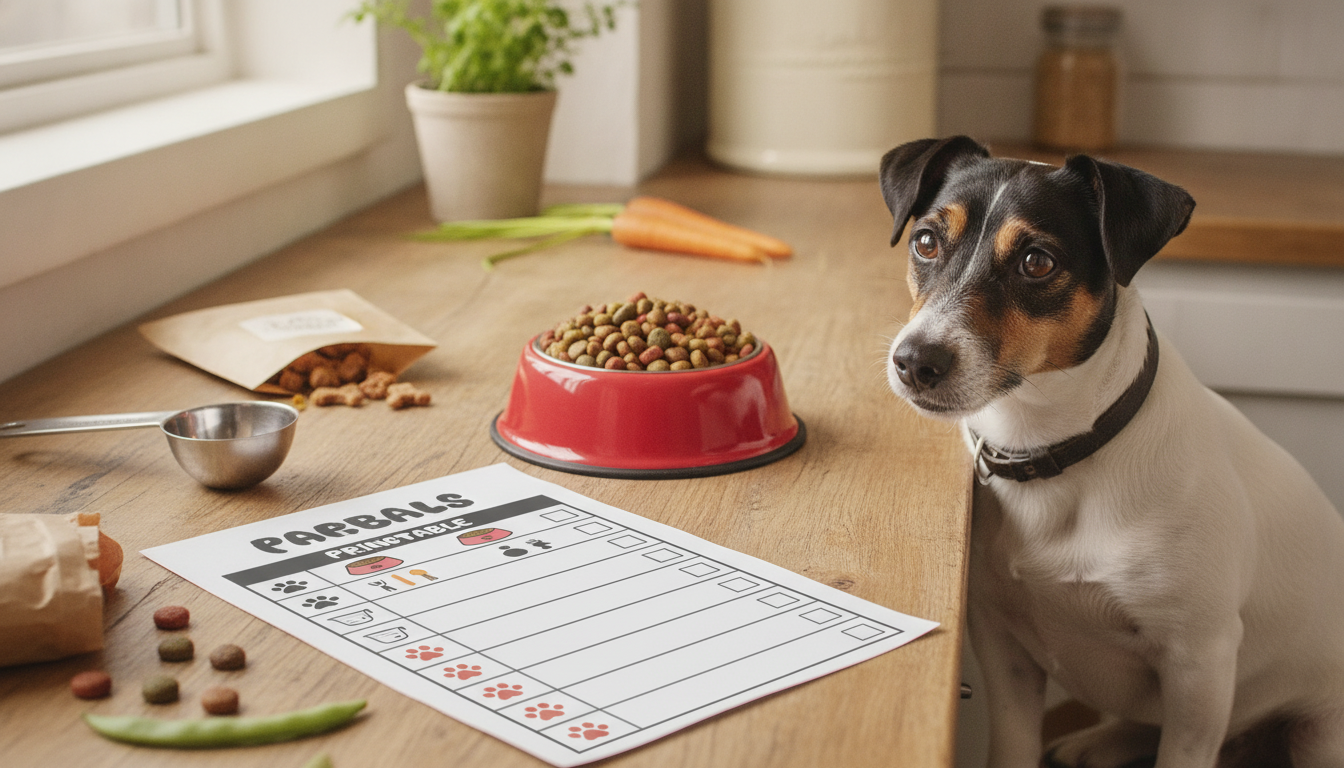
Daily routine planner checklist (adjust for age and energy)
| Time block |
What to do |
Why it matters |
Quick checklist |
| Morning |
Potty + water + breakfast + short walk |
Sets digestive rhythm and reduces anxious energy |
☐ Potty ☐ Water ☐ Meal ☐ 10–30 min walk |
| Midday |
Potty + play/enrichment + brief training |
Prevents boredom and supports learning |
☐ Potty ☐ 10–20 min play ☐ 3–5 min training |
| Afternoon/Evening |
Longer exercise + dinner + calm decompression |
Supports fitness and promotes relaxation later |
☐ 20–60 min exercise ☐ Meal ☐ Calm time |
| Night |
Final potty + settle routine (chew/bed) |
Improves sleep quality and reduces overnight wakeups |
☐ Potty ☐ Lights low ☐ Sleep space ready |
Match the Routine to Your Dog’s Life Stage
The “right” schedule depends on age, energy level, and how long your dog is home alone. Start simple, then add complexity only when the basics are smooth.
- Puppies: Plan frequent potty breaks (often after waking, eating, and play), multiple short training sessions, and lots of sleep. Keep exercise gentle and age-appropriate.
- Adults: Balance structured exercise with enrichment. Keep meal times stable and include a daily training touchpoint to maintain manners.
- Seniors: Prioritize joint-friendly movement, traction on slippery floors, warm bedding, and more frequent potty opportunities if needed.
- High-energy breeds: Add two activity peaks (morning and late afternoon) and rotate enrichment to prevent restlessness.
- Newly adopted dogs: Keep the first 2–3 weeks repetitive and calm. Introduce new places and visitors gradually to avoid overwhelm.
Exercise That Fits Real Life (and Prevents Overdoing It)
Exercise isn’t just distance—it’s also sniffing, exploring, and solving little problems. A short sniff-heavy walk can be surprisingly tiring, especially for dogs who get mentally “busy” at home.
Training and Manners: Small Sessions, Big Payoff
- Keep it brief: Many dogs learn best with 1–5 minute sessions, repeated across the day.
- Pick one daily focus: Loose-leash walking, recall, settling on a mat, polite greetings, or handling tolerance (paws, ears, collar).
- Use routine moments: Sit before meals, wait at doors, settle during family dinner, and “touch” for easy redirection.
- Track the habit loop: cue → behavior → reward. Start with consistent rewards, then vary gradually.
- Practice consent-based handling: Pause if you see freezing, whale eye, or lip licking. Build comfort slowly. For training fundamentals, the American Kennel Club (AKC) has helpful overviews.
Enrichment Plan: Prevent Boredom Without Creating Chaos
Care and Upkeep: Grooming, Health Checks, and Home Setup
- Micro-checks: Quick coat scan after walks, paw wipe for allergens, and a weekly look at ears, teeth, and nails.
- Grooming cadence: Brush based on coat type, bathe based on lifestyle, and trim nails regularly for comfort and posture.
- Refresh essentials: Clean water bowls daily, wash bedding regularly, and keep a consistent sleep space away from high-traffic stress.
- Preventative care: Follow a veterinarian’s advice for flea/tick and heartworm prevention; keep vaccination records organized. The CDC Healthy Pets, Healthy People hub also covers household hygiene basics.
- Travel-ready kit: Leash, waste bags, treats, long-lasting chew, towel, and key medical info for routine disruptions.
Weekly Reset: A 15-Minute Routine Review
A Ready-to-Use Routine Planner and Checklist
FAQ
How many walks does a dog need each day?
Most adult dogs do well with 1–3 walks a day depending on energy level, plus separate potty breaks as needed. Including at least one sniff-focused walk supports mental enrichment, while higher-energy dogs often benefit from a second “activity peak” later in the day.
What’s the best daily schedule for a puppy?
A practical puppy rhythm is a repeating cycle: potty after waking/eating/play, a short training moment, a meal (as scheduled), then a nap. Puppies need frequent breaks and lots of sleep, so flexible time blocks work better than rigid hour-by-hour plans.
How can a routine help with barking or anxiety?
Predictability lowers stress by reducing uncertainty, and a balanced mix of exercise, enrichment, and calm decompression helps many dogs settle. If barking or anxiety is severe, sudden, or escalating, consult a veterinarian or qualified behavior professional.
Recommended for you











Leave a comment